

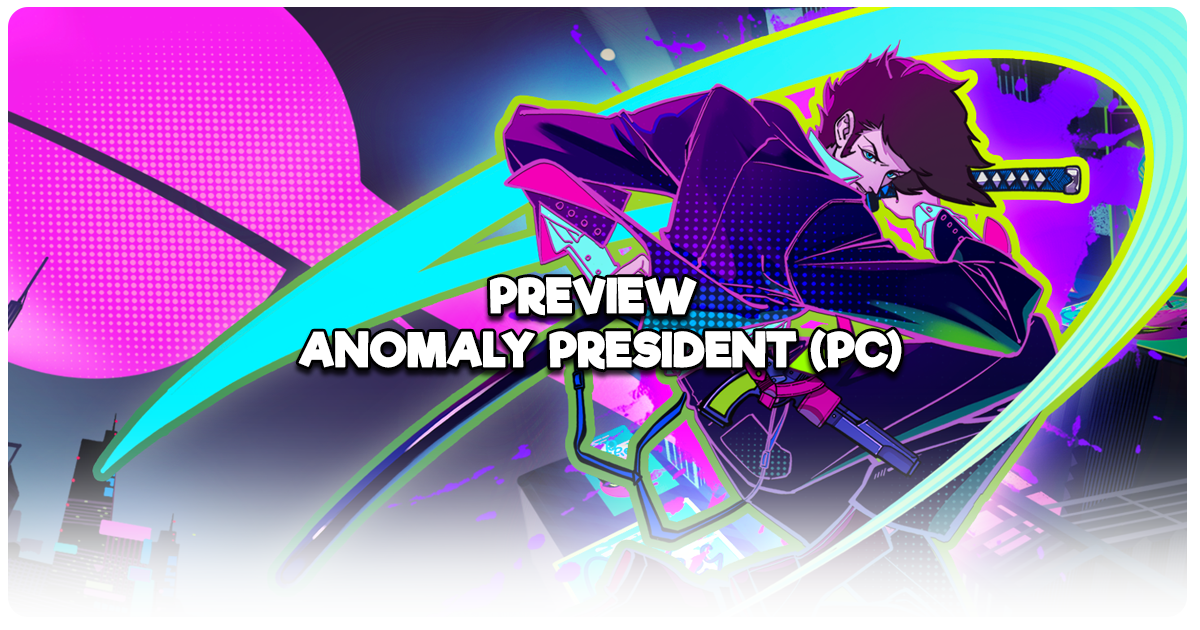
When I first came across Anomaly President, I was immediately intrigued by how unusual its concept sounded. Combining a presidential campaign with a fast-paced action rogue-like is not exactly the kind of formula I come across every day. At first, I wasn’t sure whether these two ideas would complement each other or simply feel like separate games forced together. After spending several hours with it, however, I was pleasantly surprised by how naturally the different elements come together.
Developed by Phew Phew Games, Anomaly President puts me in the shoes of a presidential candidate who is determined to challenge a corrupt and authoritarian president. My journey is divided into two distinct parts. During the day, I focus on campaigning, interacting with citizens, managing my resources and improving my mobile campaign headquarters. Once night arrives, however, the political campaign takes a much more violent direction. I leave the campaign trail behind and fight through increasingly dangerous enemies using an assortment of weapons, abilities and upgrades.
This day-and-night structure is one of the first things that stood out to me. Instead of simply using the political setting as a backdrop, the developers have incorporated it directly into the gameplay loop. My campaign isn’t just something happening in the background; the decisions I make and the improvements I unlock can influence how I approach subsequent combat encounters.
My campaign bus serves as the central hub between missions. Here, I can assign Fluffies to different rooms, improve various aspects of my campaign and unlock useful bonuses. These small creatures may seem like a simple comedic addition at first, but they actually become an important part of progression.
What I appreciate most about the concept is that Anomaly President doesn’t take itself too seriously. The entire game embraces an exaggerated, absurd sense of humour. Political campaigning, fighting corrupt forces and managing my campaign are all presented with enough personality that the experience rarely feels generic.
The result is a game that doesn’t necessarily reinvent either the rogue-like or action genres, but combines familiar ideas in a way that gives it a distinctive personality.
I would also like to thank Phew Phew Games for providing the Steam key used to test the game. This key was obtained through a collaboration with Keymailer.
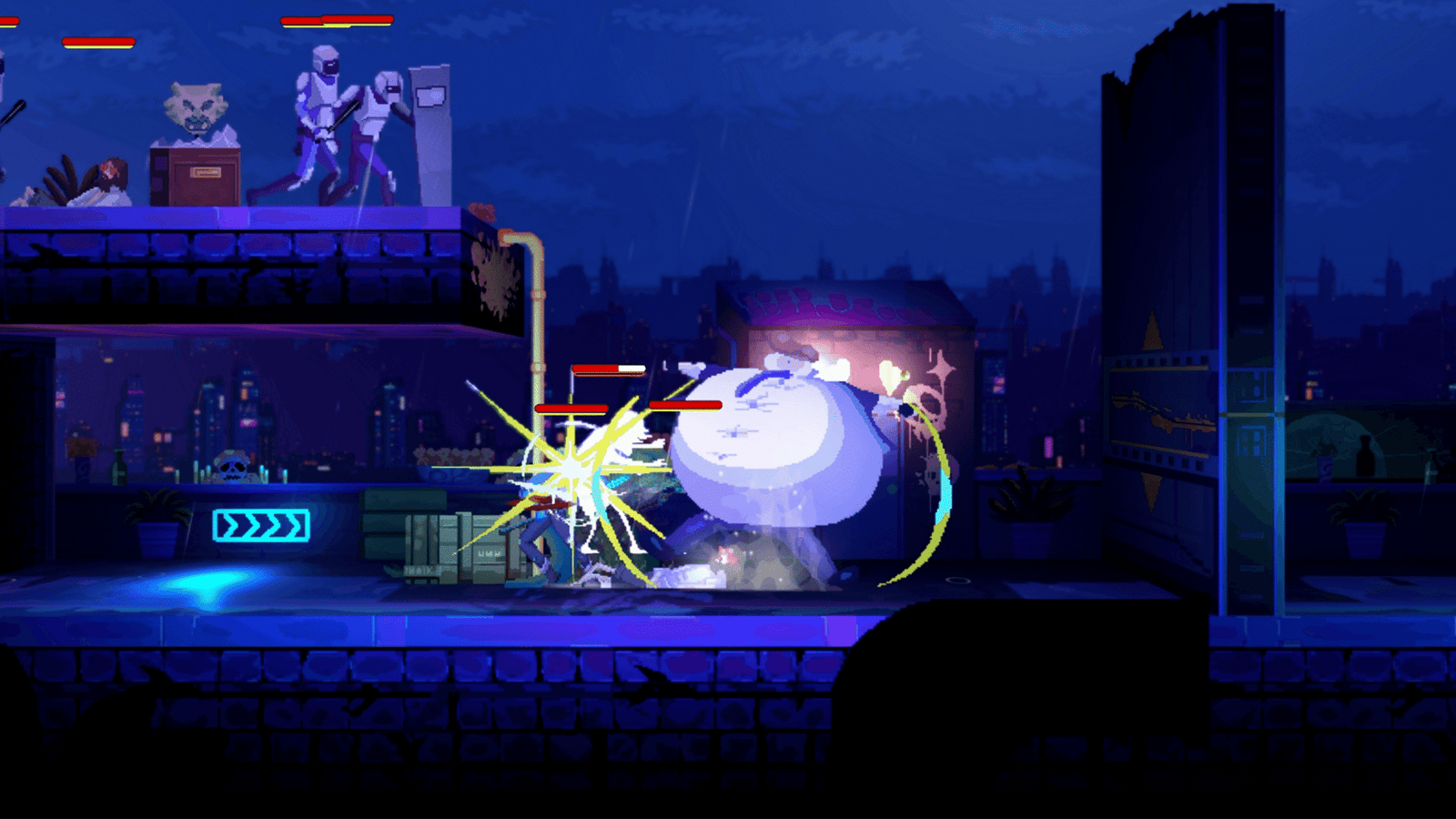
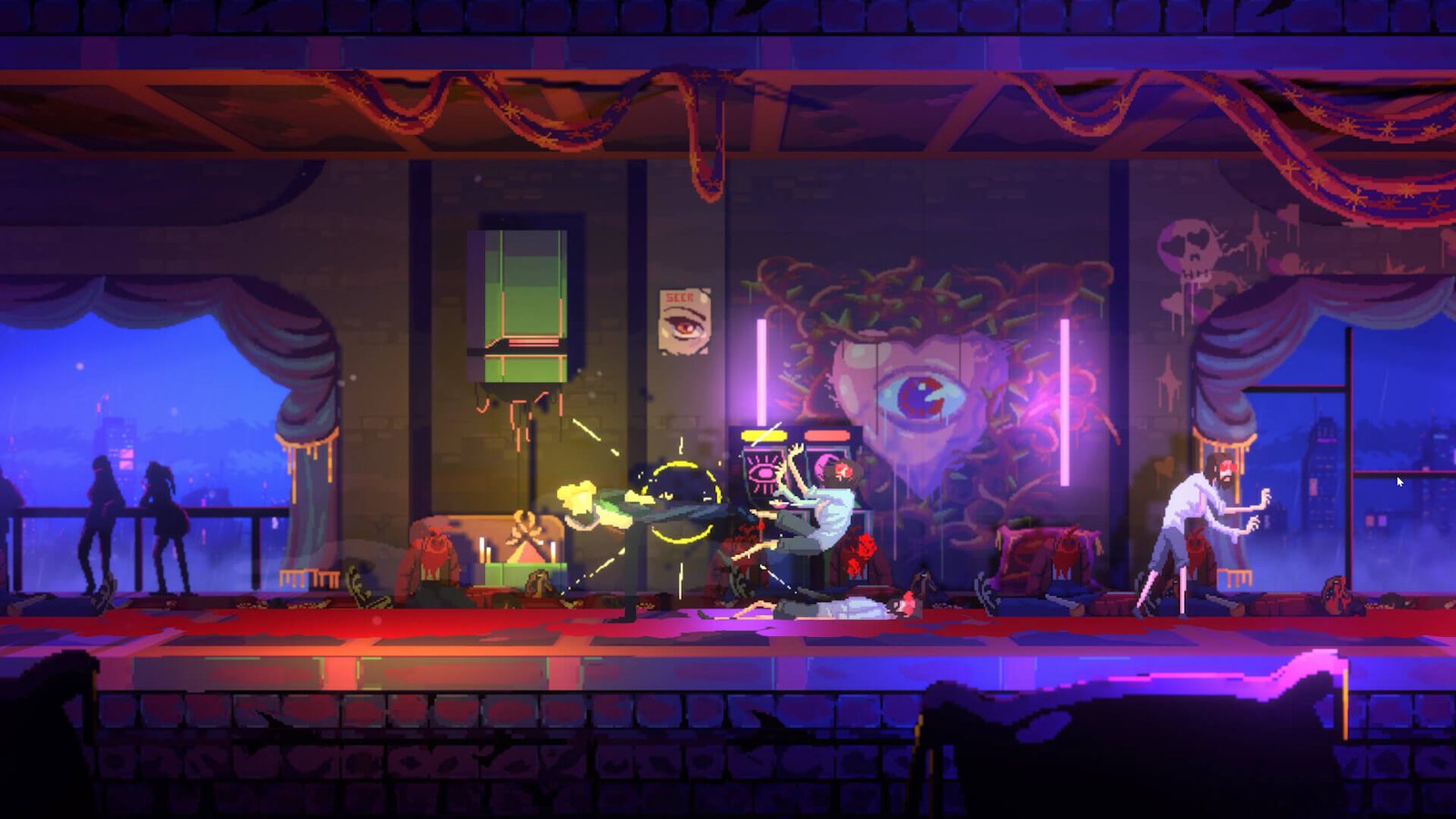
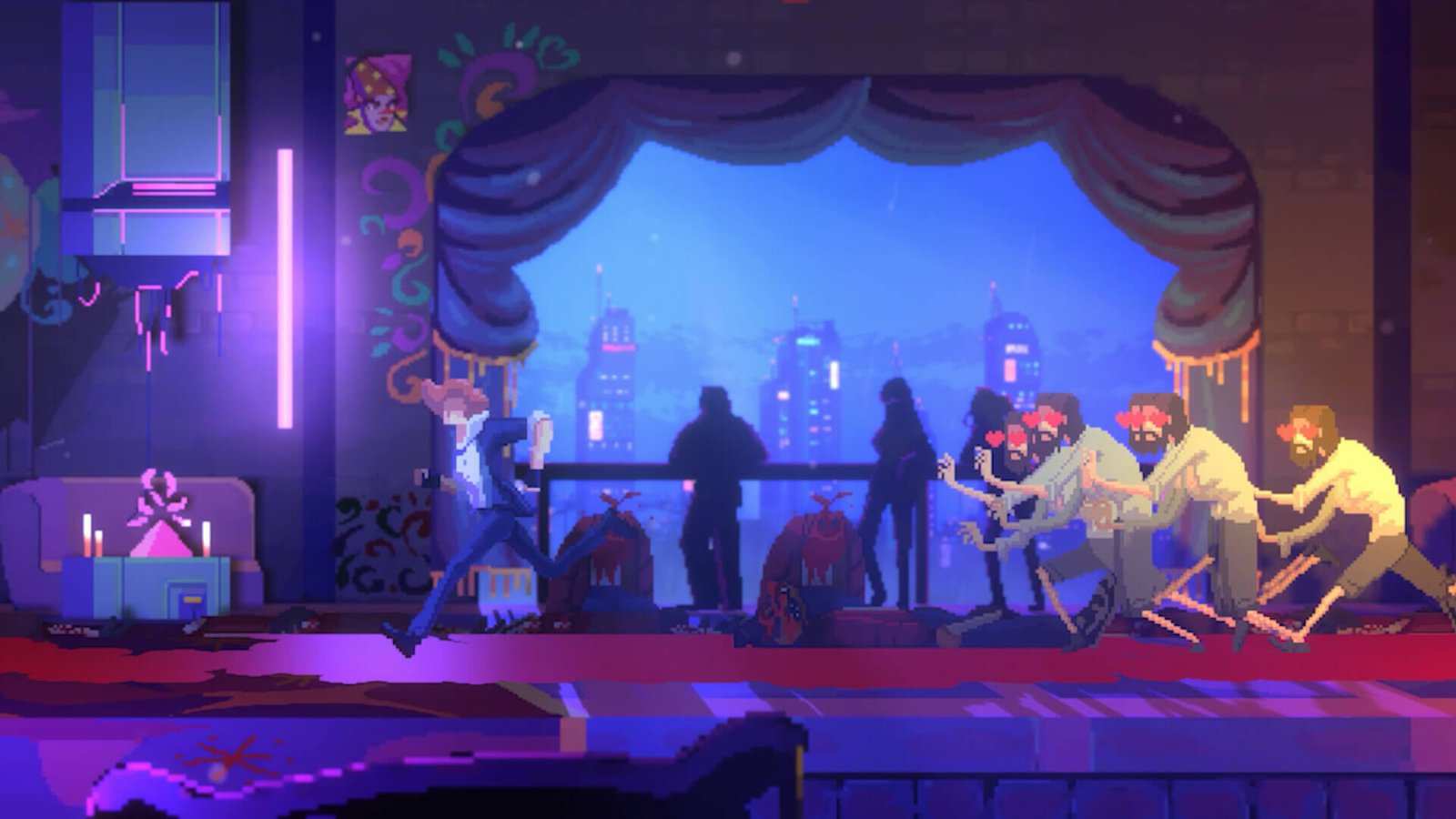
From a visual standpoint, Anomaly President immediately establishes its own identity. The game uses a colourful 2.5D pixel-art style that combines retro aesthetics with more modern visual effects. This approach works particularly well because it allows the developers to create a world that feels nostalgic without looking outdated.
I particularly enjoyed the cyberpunk-inspired environments. Neon lights, futuristic architecture, colourful signs and darker nighttime locations give the world a strong atmosphere. There is a nice contrast between the brighter campaign areas and the more dangerous environments I explore during nighttime missions.
This contrast isn’t simply cosmetic. I found that it helped reinforce the game’s two distinct gameplay phases. During the day, the world feels relatively safe and playful, reflecting the political campaign. At night, the darker environments and more intense lighting make the world feel considerably more hostile.
The character designs are also a major part of the game’s charm. Characters are exaggerated, colourful and often deliberately ridiculous. Rather than trying to make the political setting believable, the developers have created a world where absurdity is expected. I think this was the correct artistic choice because a more realistic visual style would probably have conflicted with the game’s sense of humour.
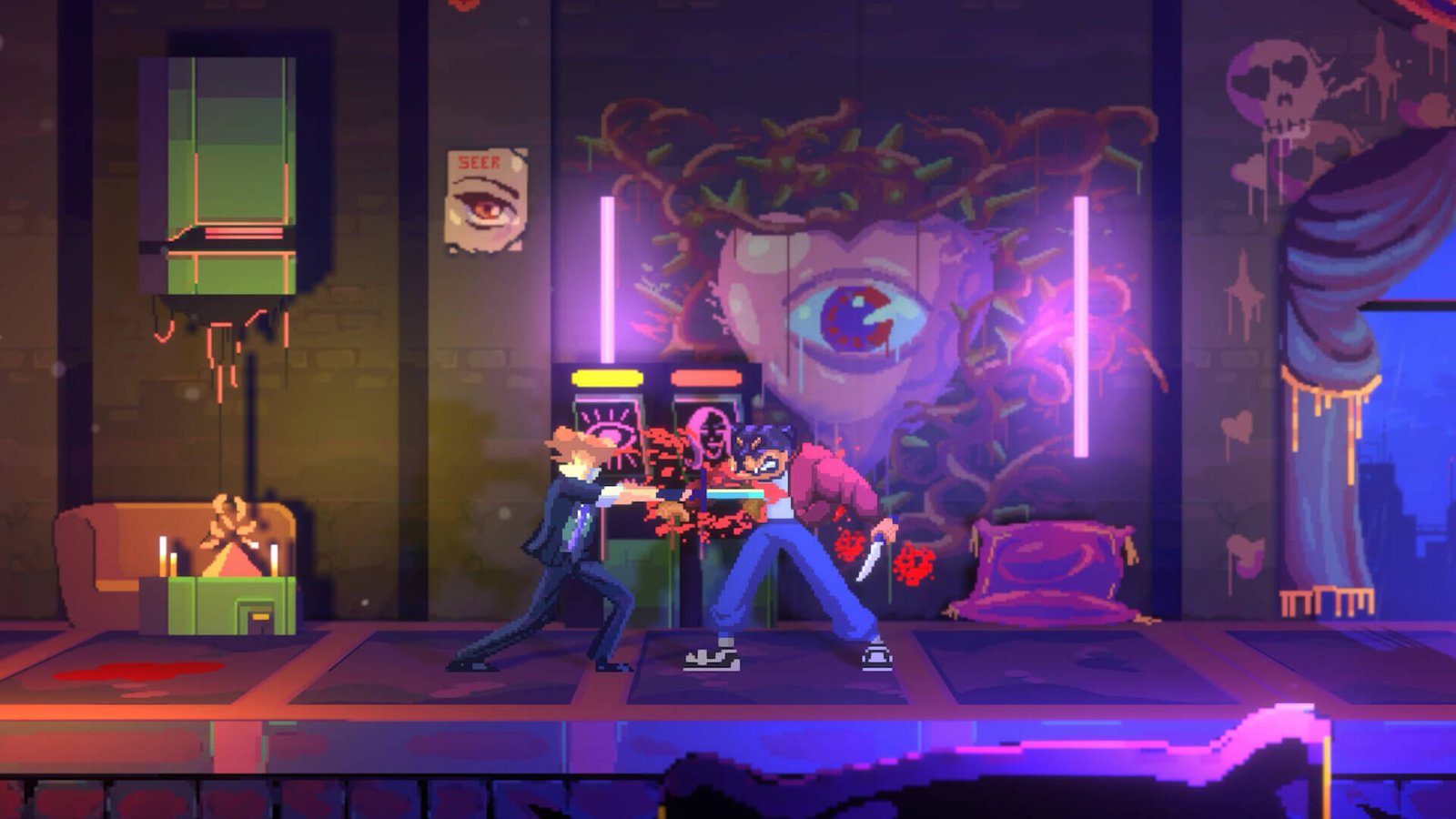
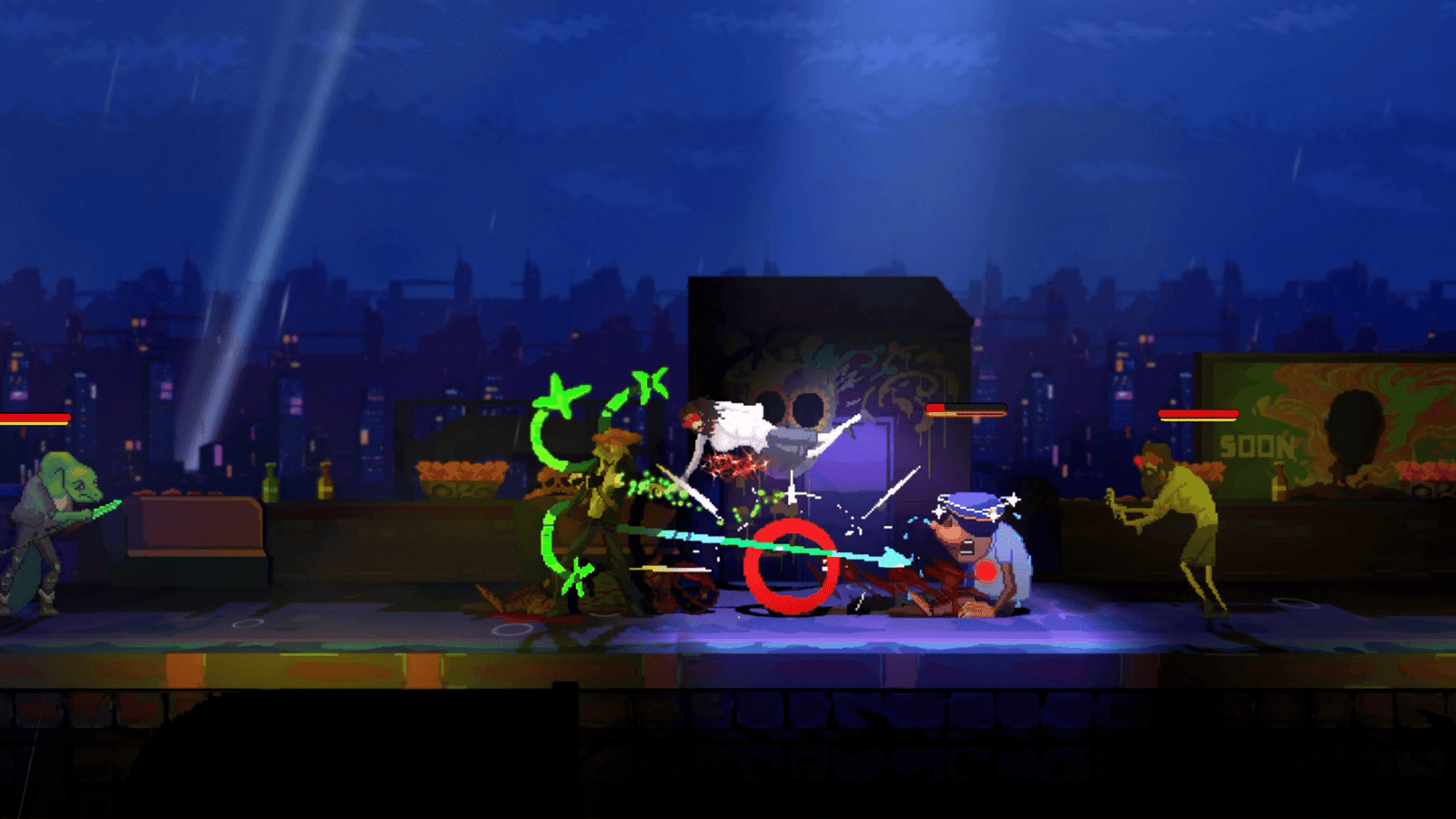
Combat is particularly impressive visually. Weapons have distinct animations, enemies react to attacks and special abilities can produce impressive effects without completely overwhelming the screen. During the more chaotic encounters, I can have several enemies attacking me simultaneously while effects are appearing around the battlefield, yet I generally remain aware of what is happening.
I also appreciate the attention given to the environments. While the game isn’t attempting to compete with modern AAA productions in terms of graphical fidelity, the backgrounds are detailed enough to give each location a sense of personality. The pixel-art style allows the developers to focus more on atmosphere and artistic direction than raw technical complexity.
There are still moments where I noticed the limitations of the presentation. Some animations could be smoother, and certain interface elements feel like they could use additional refinement. Considering that the game is still in Early Access, though, these issues are relatively minor.
Ultimately, what impressed me most wasn’t the technical quality of the graphics but their consistency. Anomaly President has a recognizable visual identity, and I could immediately tell that I was playing something created with a very specific artistic vision.
Gameplay is easily the shining star of the game’s offering for me.
The nighttime sections transform the game into a fast-paced action rogue-like where I have to fight through waves of enemies while managing my weapons, abilities and positioning. Every run gives me opportunities to improve my character and experiment with different combinations.
The combat system places a significant emphasis on timing. I can dodge incoming attacks, but simply avoiding damage isn’t always the best strategy. Learning enemy attack patterns and successfully parrying their attacks can give me a considerable advantage.
This is one of the mechanics I enjoyed the most. When I successfully parry an enemy, break their posture and immediately follow up with a strong attack, the combat feels responsive and rewarding. These moments make me feel like I’m actually improving rather than simply becoming stronger through upgrades.
The weapon variety also helps keep the combat fresh. I can experiment with swords, pistols, hammers and other weapons, each of which changes the way I approach encounters. Some weapons encourage aggressive close-range combat, while others allow me to maintain more distance.
The anomaly system adds another layer of customization. As I progress, I can acquire different abilities that influence how my character performs. Defeating bosses can also provide permanent anomaly powers, giving me additional incentives to take on challenging encounters.
What I particularly like about this system is that it encourages experimentation. Instead of simply trying to find one universally powerful setup, I can try different combinations and see how they interact.
The rogue-like structure also works well for replayability. Each run gives me another opportunity to improve my performance, experiment with a new build or simply see how far I can progress. Even when a run doesn’t go as planned, I usually come away with a better understanding of the mechanics.
The campaign system provides an interesting contrast to the combat.
During the day, I can focus on increasing my political support, interacting with characters and improving my campaign bus. Assigning Fluffies to different rooms adds a light management component that gives me something meaningful to do between combat runs.
I found this particularly useful because it prevents the overall experience from becoming too repetitive. If Anomaly President consisted exclusively of fighting through procedurally generated encounters, the formula could become predictable much faster. The campaign sections give me an opportunity to slow down, make decisions and prepare for the next run.
However, I can also understand why some players might not enjoy these sections as much. If I were looking exclusively for an action rogue-like, I might find the political management elements to be an interruption. Personally, though, I think they contribute significantly to the game’s identity.
The combat isn’t perfect. I occasionally noticed inconsistencies with hit detection and enemy reactions, and some encounters can begin to feel repetitive when I have played for an extended period. Enemy variety is an area where I would like to see more development in future updates.
I also think the game could benefit from additional refinement to its difficulty curve. Some encounters can feel significantly more demanding than others, particularly when several enemies attack simultaneously.
Nevertheless, its fundamental gameplay loop is strong. I always feel like I have something to work toward, whether that means improving my campaign, unlocking a new ability, experimenting with a different weapon or simply trying to beat my previous run.
The story of Anomaly President is just as unconventional as its gameplay.
I play a presidential candidate who is attempting to overthrow an authoritarian president and ultimately take his place. The premise could have been used to create a serious political thriller, but the developers instead decided to embrace satire and absurd comedy.
Personally, I think this was the right approach.
The story constantly reminds me that I’m not supposed to take the political setting literally. Characters are exaggerated, situations become increasingly ridiculous and the game isn’t afraid to make fun of political campaigning.
I particularly enjoyed how the game transforms the process of winning votes into something completely unconventional. Rather than simply giving speeches and shaking hands, I find myself participating in bizarre situations and activities designed to increase public support.
Despite the comedy, there is still a more personal story underneath everything. The protagonist’s connection to the central conflict and the mystery surrounding his father give the narrative a little more emotional weight. This provides a reason to continue progressing beyond simply wanting to defeat the next boss.
The characters also contribute significantly to the game’s personality. Their exaggerated personalities fit the overall tone and help make the world feel more alive. Some interactions are intentionally ridiculous, but I found that they fit naturally within the game’s universe.
The main limitation is that the game is still in Early Access. Because the story is not yet complete, I don’t think it would be fair to judge the current version as the definitive narrative experience.
At this stage, I would describe the story as entertaining rather than profound. I don’t think the game is trying to tell me an exceptionally complex political story. Instead, it uses its political setting as a foundation for humour, action and character interactions.
And honestly, I think that works. The story knows what kind of game it is, and that self-awareness makes the absurdity considerably more enjoyable.
The music was another aspect of Anomaly President that I found particularly effective.
The soundtrack relies heavily on electronic and synthwave influences, which fit the game’s cyberpunk-inspired visual style extremely well. From the moment I started playing, I felt that the music helped establish the game’s retro-futuristic atmosphere.
The combat tracks are particularly effective. When I’m surrounded by enemies and trying to time my attacks and parries, the energetic electronic music adds another layer of intensity. It helps prevent repeated combat encounters from feeling completely mechanical.
I also appreciate how the soundtrack complements the game’s different gameplay phases. The campaign sections generally have a more relaxed atmosphere, while nighttime missions feature more aggressive and energetic music.
This is important because Anomaly President relies heavily on contrast. The daytime sections are about campaigning and management, while the nighttime sections are about violence and survival. The music reinforces that distinction without making the two halves feel disconnected.
The sound effects are generally strong as well. Weapons have distinct sounds, attacks have enough impact to make combat satisfying and anomaly abilities provide their own audio identity.
However, I did occasionally feel that certain attacks could have stronger audio feedback. In a game where parrying and timing are so important, sound plays an important role in communicating whether an attack connected successfully. Strengthening some of these effects could make the combat feel even more responsive.
Still, these are relatively minor criticisms. Overall, the combination of electronic music, combat effects and environmental sounds works extremely well with the game’s visual identity. The soundtrack doesn’t simply accompany the gameplay; it contributes to the overall personality of the experience.
After spending several hours with Anomaly President, I came away much more impressed than I initially expected to be.
The concept sounds strange when I describe it: I’m running for president during the day, managing a campaign bus and recruiting Fluffies, only to spend the night fighting through hordes of enemies with swords, pistols and supernatural abilities.
Yet somehow, it works.
For me, the biggest strength of Anomaly President is that it doesn’t try to hide how ridiculous its premise is. It embraces the absurdity and uses it to create an experience that feels different from the countless other rogue-like games currently available.
The combat is the main reason I kept coming back. I particularly enjoyed the emphasis on dodging, parrying and breaking enemy postures. Once I started becoming comfortable with the combat system, encounters became considerably more satisfying because I wasn’t simply attacking everything in front of me. I was learning enemy patterns and making deliberate decisions about when to attack and when to defend.
The progression system also gives me plenty of reasons to continue playing. Weapons, anomaly powers, upgrades and the campaign bus all contribute to a sense of progression that extends beyond a single run.
Visually, the game is equally distinctive. Its colourful 2.5D pixel-art presentation, cyberpunk environments and exaggerated character designs give it a strong identity. The synthwave-inspired soundtrack complements those visuals perfectly and adds a lot of energy to the combat.
The main weaknesses are largely understandable given the game’s Early Access status. I encountered some inconsistencies with hit detection and enemy reactions, while enemy variety could eventually benefit from additional expansion. The story is also incomplete, meaning that some of the narrative potential remains to be seen.
Even so, I think the foundation is very strong.
What ultimately convinced me about Anomaly President is that it doesn’t feel like a collection of unrelated mechanics. The campaign, management systems, progression and combat all feed into the same overall loop. I campaign during the day, improve my operation, prepare for the next challenge and then take the fight to the enemy at night.
It is an unusual structure, but it gives me a reason to keep playing.
I wouldn’t recommend Anomaly President to someone looking for a completely finished and polished experience just yet. The Early Access label is important, and there is clearly room for additional balancing, content and refinement.
However, for players who enjoy action rogue-like games and don’t mind supporting a game while it continues to evolve, I think there is plenty here to enjoy already.
Anomaly President doesn’t reinvent the genre, but it doesn’t need to. Its biggest accomplishment is taking familiar rogue-like mechanics and placing them inside a bizarre political world that gives them a personality of their own.
I went into Anomaly President expecting an entertaining curiosity. I came away feeling that there is a genuinely good game underneath the absurd premise, and I’m interested to see how much better it can become as development continues.
In its current early access offering, Anomaly President can be purchased on Steam for CDN$ 17.99, here.

Content creator from Quebec covering news, reviews, opinion pieces, interviews, and contests. Married and a dad of two little monsters. Michel is constantly immersed in a deep nostalgia for Japanese cartoons from the 1980s and 1990s.