

There are games that take themselves very seriously, and then there is Gennady. The game wastes absolutely no time establishing that you’re in for something unusual. You wake up in an alien meat factory, practically naked, surrounded by grotesque creatures, blood, slime and enough biological matter to make you question every career decision that brought you here. As Gennady, my objective was refreshingly simple: survive, fight my way through this bizarre world and figure out why the hell I was there in the first place.
Gennady blends hardcore platforming with roguelike mechanics, fast-paced combat and an intentionally absurd sense of humor. Rather than spending hours explaining its universe, the game dropped me into the middle of the madness and trusted its environments, enemies and scattered story elements to do the rest. That approach worked surprisingly well.
There was something inherently entertaining about controlling a nearly naked protagonist as he punched and blasted his way through an alien meat factory. The premise was ridiculous, but Gennady embraced that ridiculousness instead of trying to make it more serious than it needed to be. And that irreverent attitude carried throughout the experience.
I would also like to thank Feed 64 and Vsoo Games for providing the Steam key used to test the press demo. This key was obtained through a collaboration with Keymailer.
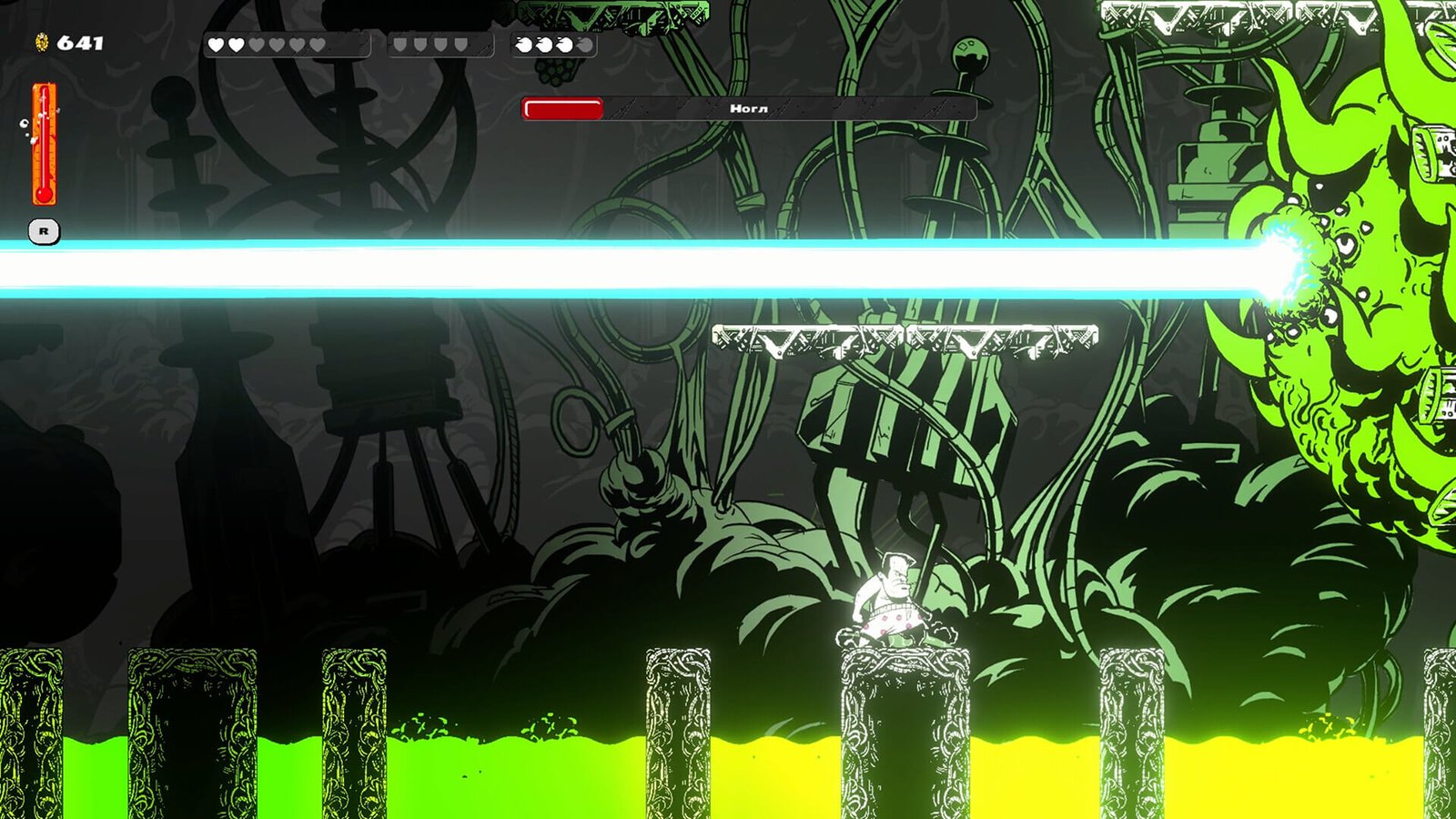
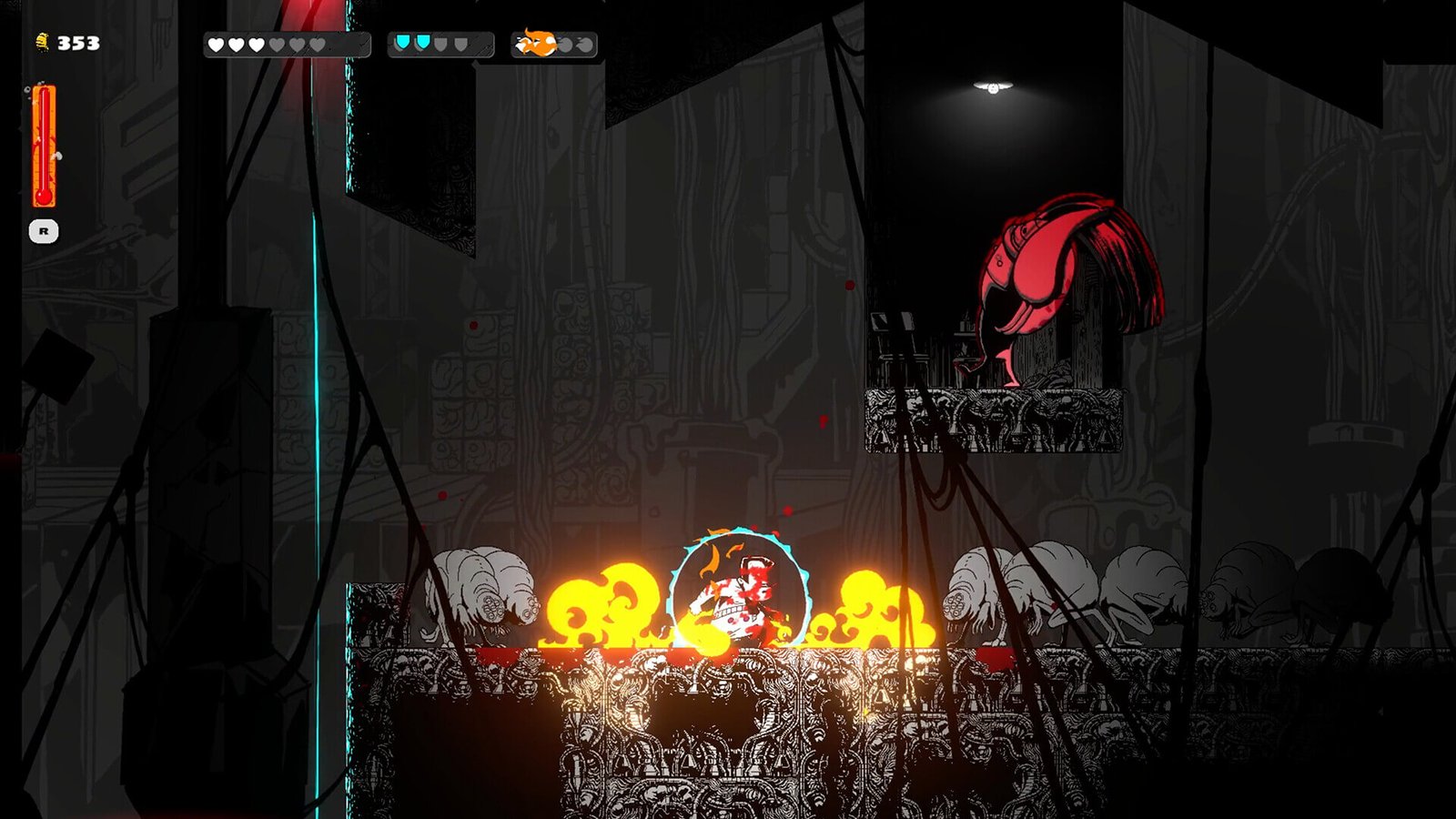
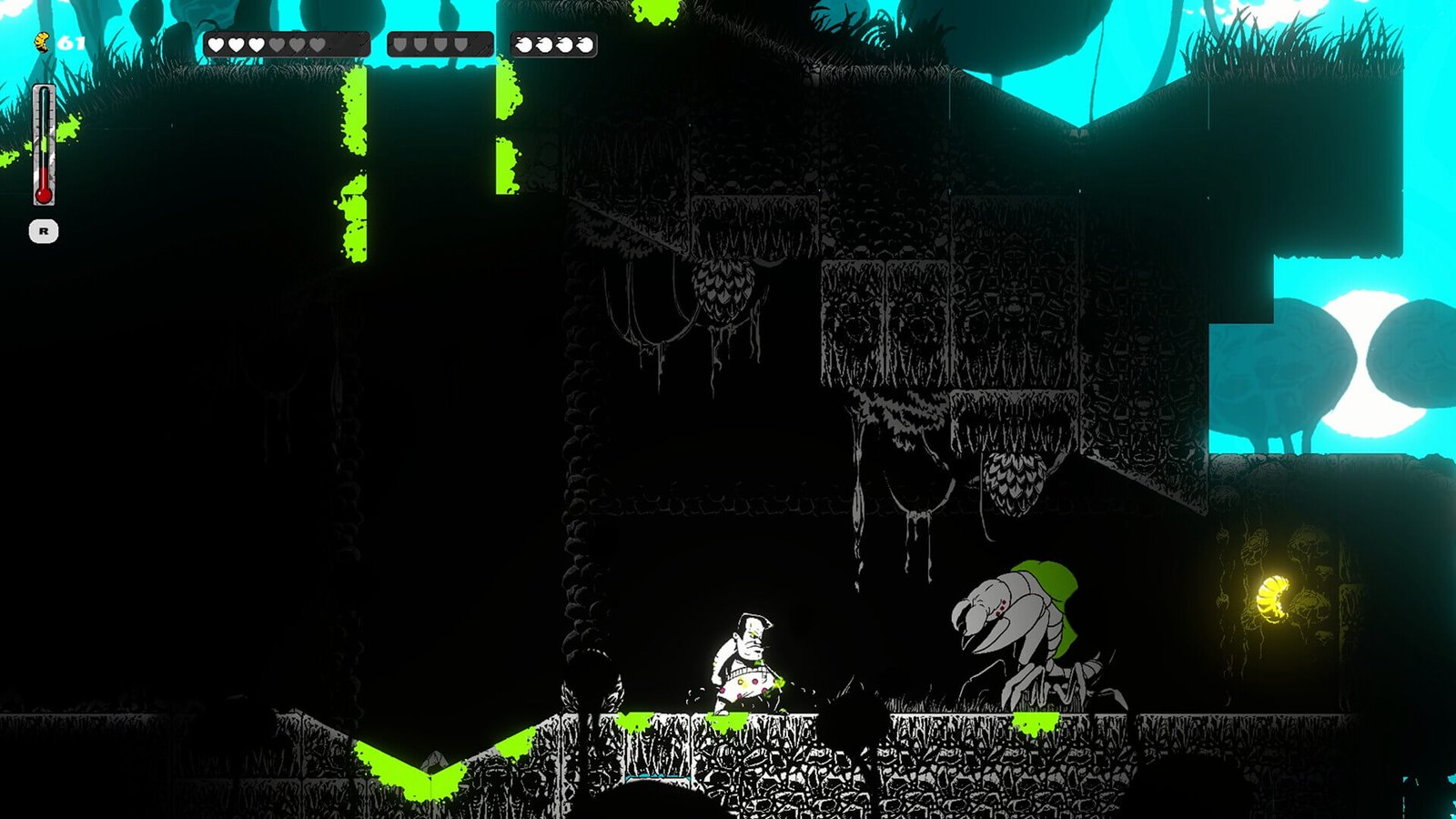
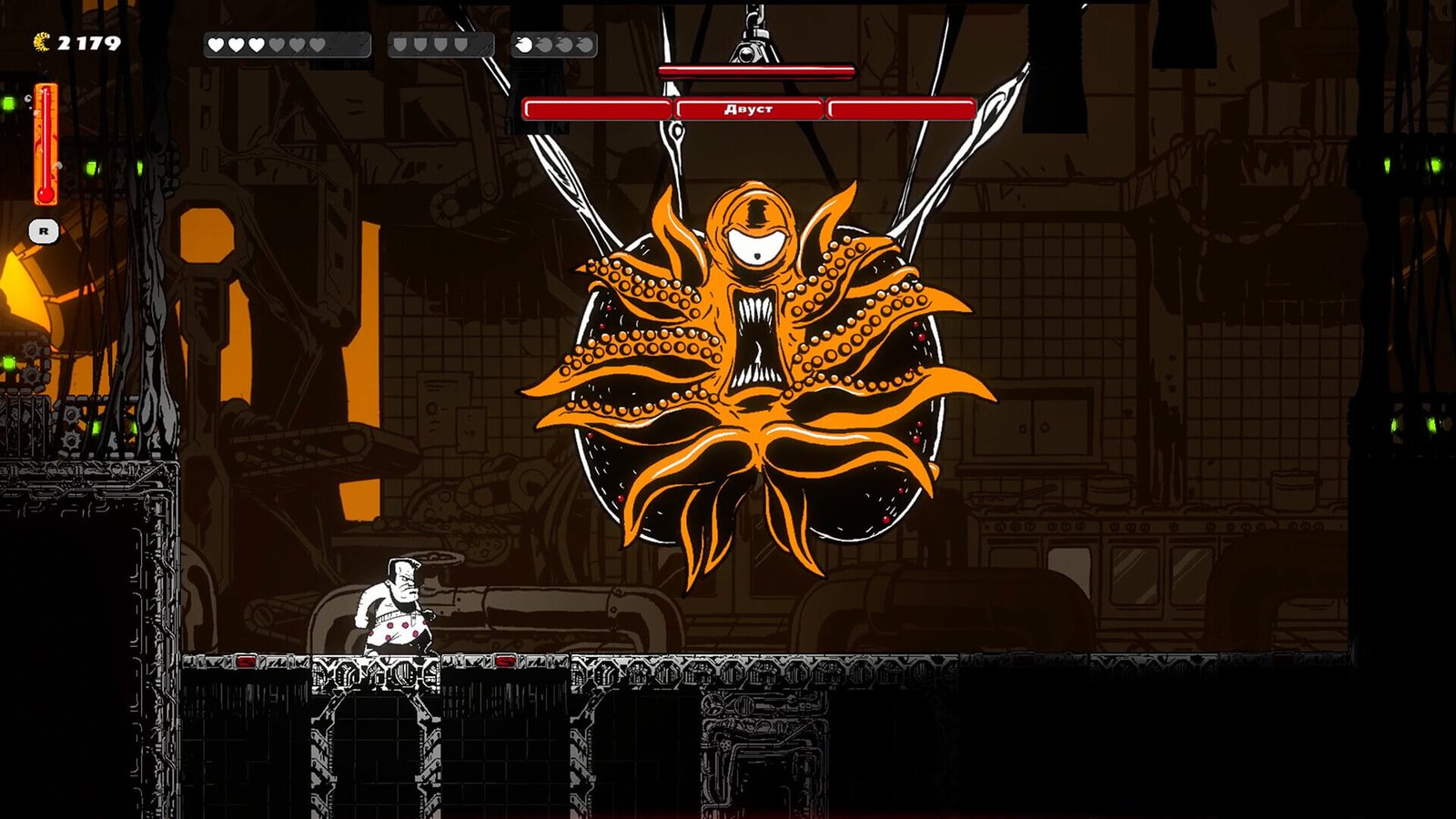
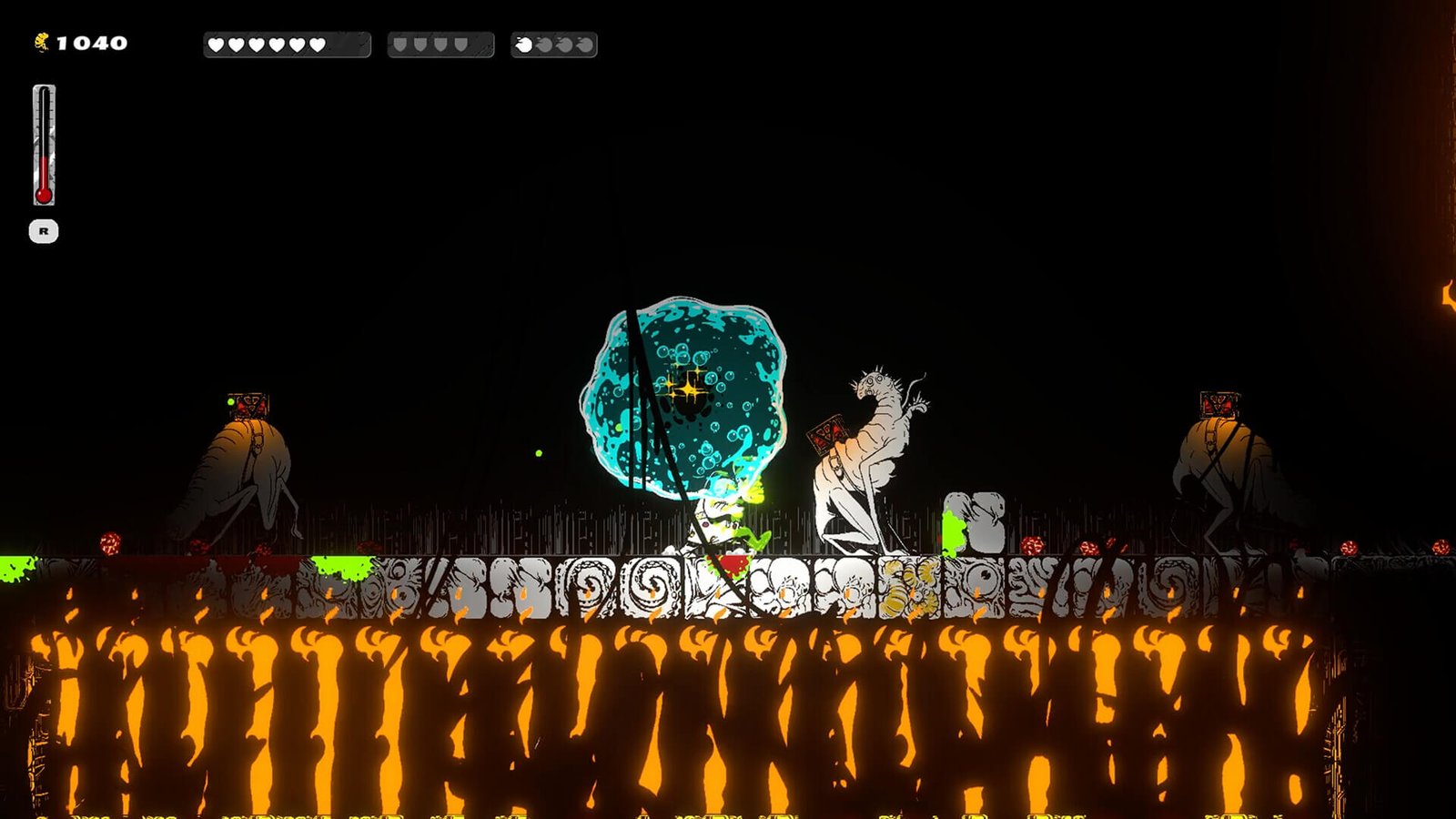
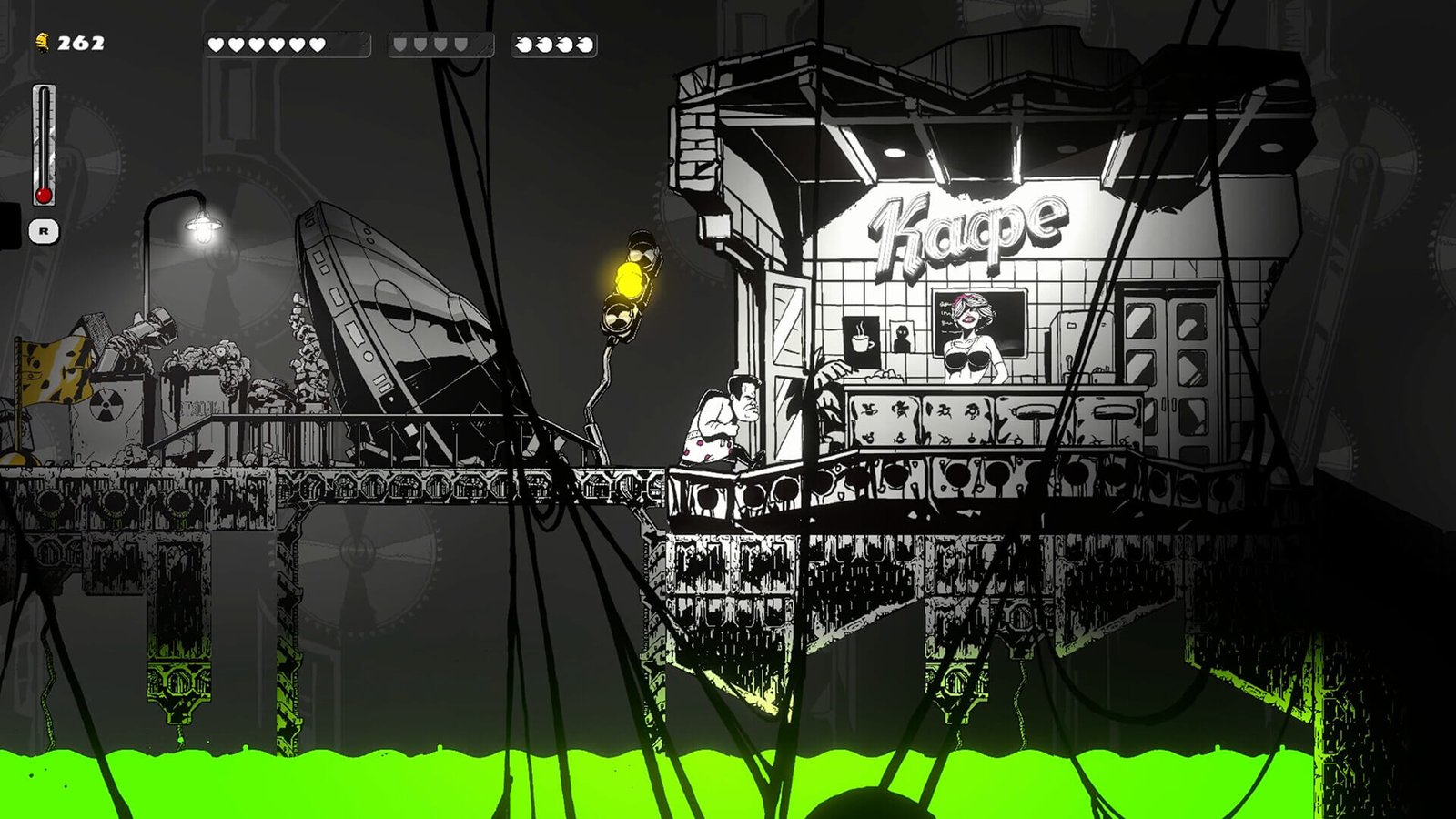
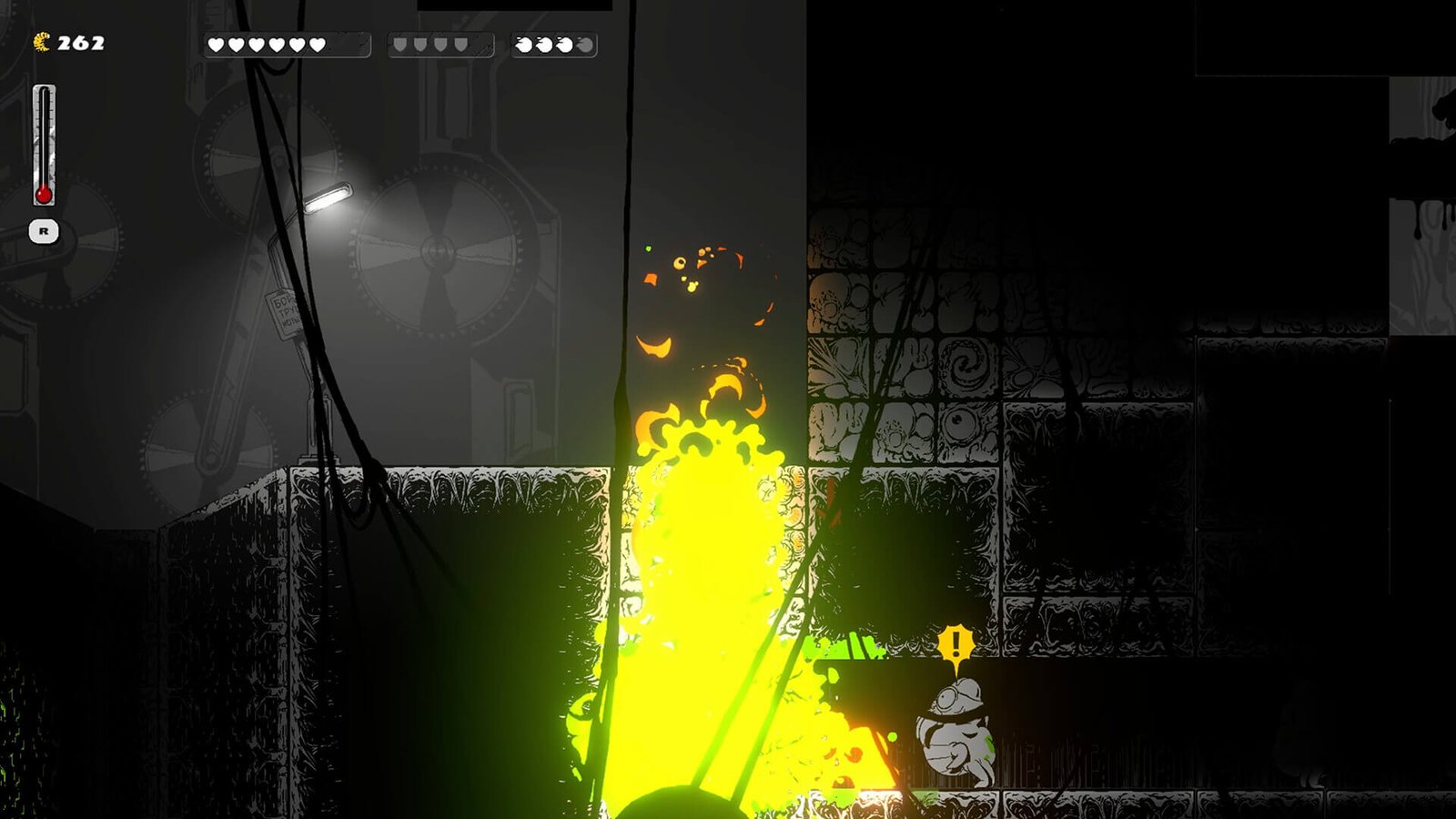
Gennady immediately made an impression with its hand-drawn visual style. Rather than relying on polished 3D graphics, the game uses frame-by-frame animation and a predominantly black-and-white aesthetic. Blood, slime and other elements occasionally burst onto the screen with splashes of color, creating a striking contrast against the otherwise monochromatic presentation. It gave the game the appearance of a lost animated short that somehow wandered into extremely violent territory. The animation was particularly impressive. Gennady moved with exaggerated, almost cartoonish physicality, and his attacks had a satisfying sense of impact. The enemies were similarly expressive, with their strange designs and animations helping make even relatively mundane encounters feel visually interesting.
The environments also benefited from the art direction. The opening meat factory was every bit as unpleasant as it should have been, filled with machinery, biological matter, traps and creatures that looked like they had no business existing in the first place. As I progressed, new environments helped keep the visual presentation from becoming stale.
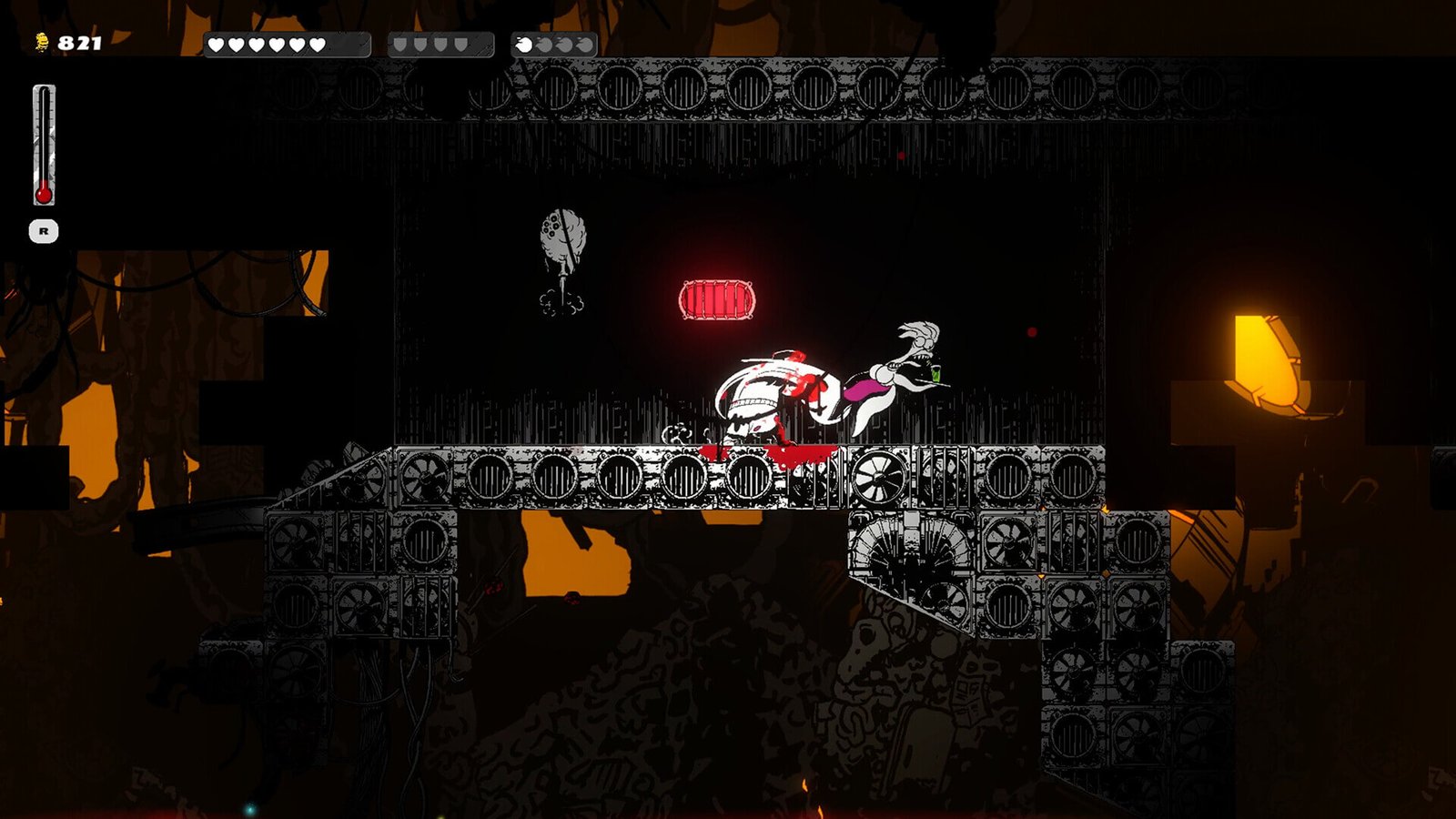
There were moments, however, when the monochromatic aesthetic worked against the game. With multiple enemies, projectiles and environmental hazards on screen, distinguishing everything could occasionally become difficult.
Still, that’s a relatively minor complaint.
Gennady doesn’t need cutting-edge technology to stand out. Its greatest visual strength is that it looks like Gennady.
The hand-drawn animation, grotesque character designs and deliberately strange aesthetic give the game a visual identity that many larger productions would struggle to achieve.
If the visuals gave Gennady its personality, the gameplay gave me a reason to keep playing.
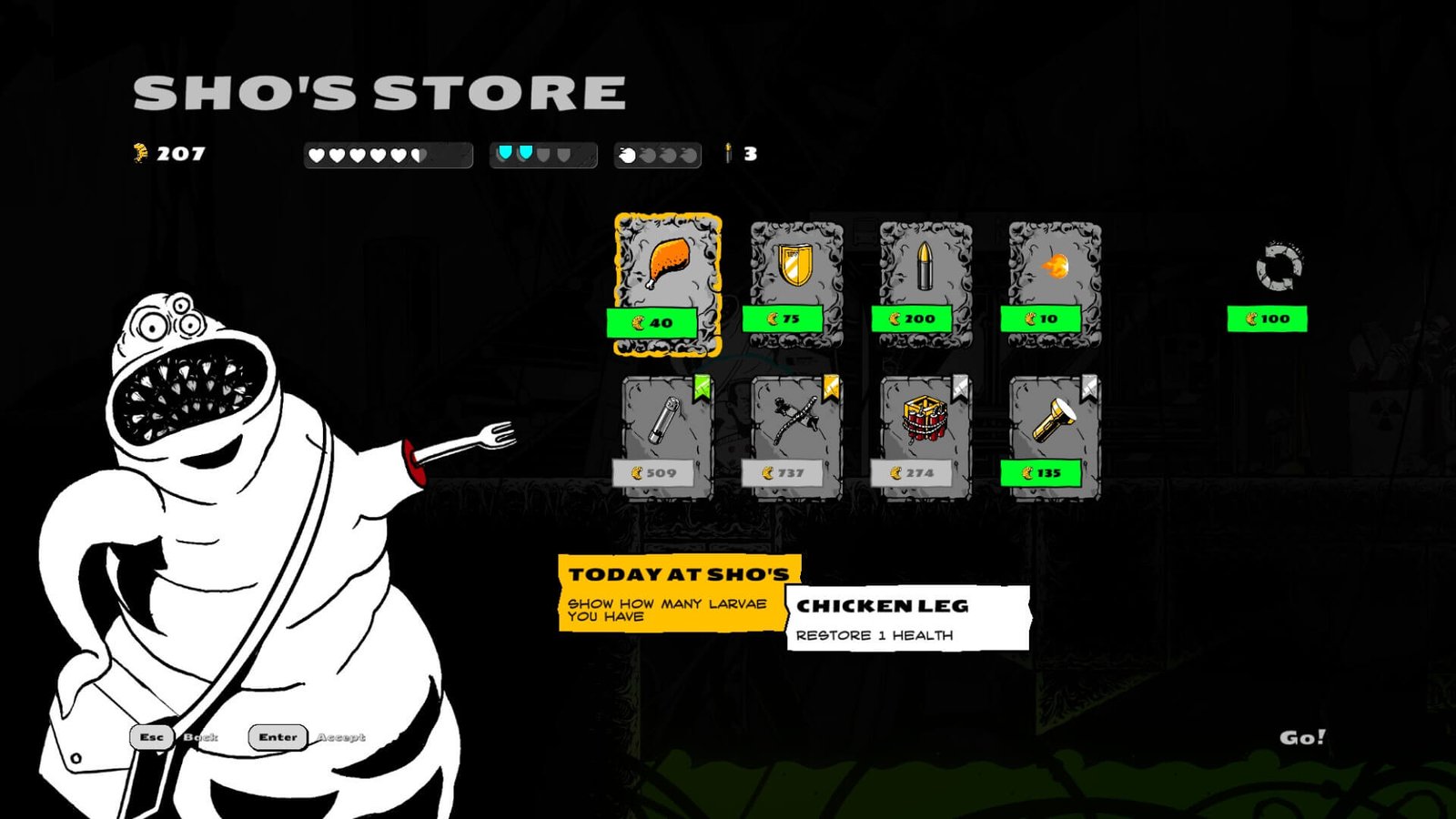
The game combines platforming and roguelike mechanics with fast-paced combat, randomized environments and character progression. Each run took me through a series of rooms filled with enemies, traps and environmental hazards, while upgrades and artifacts allowed me to gradually develop my character.
The key word here is movement.
Standing still was rarely an option. The dash mechanic was central to almost everything I did. It allowed me to quickly traverse the environment, attack enemies and destroy certain obstacles, turning movement itself into an important part of combat. This gave encounters a much more aggressive rhythm than I initially expected.
I could punch enemies at close range, use the blaster when I needed some distance or simply throw myself through the chaos using my dash. The game rewarded me for staying mobile rather than approaching every encounter cautiously.
And then there was Rage Mode. After building up enough rage, I could activate the ability and temporarily become faster and more powerful while gaining a period of invulnerability. When activated at the right moment, it transformed me from a guy desperately trying to survive into an absolute wrecking ball.
Those moments were some of the most satisfying in the game. The roguelike progression also added an important layer of experimentation. Upgrades and artifacts allowed me to modify my character and experiment with different approaches to combat. Rather than simply making each subsequent run a repeat of the previous one, the progression system encouraged me to try different combinations and playstyles.
Naturally, Gennady wasn’t particularly interested in letting me have an easy time.
Death was inevitable, and some sections could be brutally unforgiving. When several enemies and environmental hazards were combined, mistakes could be punished quickly. There were moments when I had to slow down, learn enemy patterns and rethink my approach instead of simply charging ahead.
That difficulty won’t be for everyone.
The roguelike structure also meant that repetition was unavoidable. Familiar rooms and situations eventually began to feel less exciting, particularly after several failed runs. Fortunately, the combat remained enjoyable enough to keep me coming back.
The story is where Gennady fully embraces its bizarre identity. The premise is simple enough: Gennady wakes up in an alien environment and has to fight his way through it.
What follows is considerably harder to explain. Rather than delivering a conventional narrative, Gennady uses its strange world and increasingly bizarre situations to gradually build its story. The game provides additional context through collectible story elements, but it never feels like the narrative is trying to become the main attraction. And that’s probably for the best. I found myself more interested in discovering what bizarre situation was waiting around the next corner than trying to unravel every detail of the plot.
The humor was also an important part of the experience.
Nothing about Gennady feels particularly interested in taking itself seriously. The contrast between the grotesque environments, excessive violence and ridiculous protagonist creates an atmosphere that is consistently strange without becoming completely incoherent.
Players shouldn’t come into Gennady expecting a deeply emotional story or complex character development. This is a game about a nearly naked man fighting his way through an alien nightmare. Sometimes, that’s all the explanation you need.
The audio presentation followed the same philosophy as the rest of the game: don’t overcomplicate things, but make sure everything contributes to the experience.
The soundtrack helped maintain the game’s frenetic pace, while the sound effects gave the combat the necessary punch. Every attack, impact and encounter contributed to the overall sense of chaos.
This became particularly effective during the game’s more hectic moments.
When I was chaining attacks, dashing between enemies and activating Rage Mode, the combination of music and sound effects helped turn the screen into a controlled mess of violence and movement.
The soundtrack wasn’t necessarily something I would have listened to independently, but it fit the game’s atmosphere well.
More importantly, the audio never felt disconnected from the gameplay. Attacks sounded appropriately impactful, movement felt responsive and the overall presentation reinforced the game’s cartoonish brutality. It wasn’t trying to reinvent video game audio and it didn’t need to.
Gennady is weird. Not mildly weird. Not “quirky indie game” weird. It is the kind of weird where the first thing you have to explain to someone is why you’re controlling a nearly naked man fighting grotesque aliens inside a meat factory.
There is an unmistakable personality running through every part of Gennady. The hand-drawn animation gives it a distinctive look, the ridiculous premise gives it an immediate sense of identity and the fast-paced combat gives all that madness a solid mechanical foundation. The dash mechanic was particularly effective, turning movement into an offensive tool rather than simply something used to get from one platform to another. Rage Mode also provided some genuinely satisfying moments, especially when I managed to build enough momentum to tear through several enemies in succession.
The roguelike progression helped keep things interesting, giving me reasons to experiment with different upgrades and builds between runs. It wasn’t without its problems, though.
The difficulty occasionally crossed into frustrating territory, especially when several hazards were thrown at me simultaneously. The procedural structure also inevitably introduced some repetition, and players who don’t enjoy the trial-and-error nature of roguelikes may find the constant cycle of dying and starting over difficult to appreciate. The story was similarly unconventional, prioritizing absurdity and atmosphere over a traditional narrative. But the game isn’t trying to be a traditional game. It’s trying to be a bloody, ridiculous, hand-drawn fever dream with satisfying combat. And it succeeded at that.
Gennady is chaotic, grotesque, violent and completely absurd, and that’s exactly why it works. It may not reinvent the roguelike platformer, but between satisfying combat, excellent animation, fast-paced movement and an endless supply of bizarre situations, Gennady delivers one hell of a strange good time.

Content creator from Quebec covering news, reviews, opinion pieces, interviews, and contests. Married and a dad of two little monsters. Michel is constantly immersed in a deep nostalgia for Japanese cartoons from the 1980s and 1990s.